Did Someone Obstruct Your Path? Legal Rights and Sections for blocking a farm road
Rural India and agriculture dominant regions frequently witness conflicts related to land boundaries and access routes. It is commonly observed that due to personal animosity or the intention to illegally occupy land, neighboring farmers or dominant individuals obstruct the established pathways. The biggest question that arises in such situations is what legal alternatives are available to the aggrieved person who is facing the severe issue of blocking a farm road. When someone suddenly barricades a pathway that has been in use for years, it not only disrupts agricultural operations but also creates immense mental and financial stress for the entire family dependent on that cultivation.
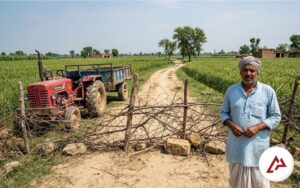
In this comprehensive blog post, we will guide you from a strictly professional and legal perspective on the exact laws you should invoke if you are experiencing the distress of blocking a farm road. We will discuss in detail the remedies available under the newly enacted criminal laws such as the Bharatiya Nyaya Sanhita and the Bharatiya Nagarik Suraksha Sanhita, along with specific state revenue laws, ensuring you can protect your rights without any fear. Understanding these legal frameworks is the first vital step toward reclaiming your legitimate access and ensuring your agricultural activities continue unhindered.
Read More…
- Buying Land from Dalits in Uttar Pradesh Could Be Risky! SC/ST Act Land Protection Law Explained
- Can Marriage or a Joint Family Take Away Your Property? Rules for buying land in Uttar Pradesh
- Understanding Section 80 (Section 143) of the Uttar Pradesh Revenue Code, 2006
- 12 Years of Possession (Adverse Possession) and the Property is Yours? The Complete Story of the Limitation Act and Supreme Court Rulings!
- Will And Inheritance? Knowing These Facts is Crucial to Save Your Land!
- Illegal Encroachment on Land in UP? How Bulldozers and Courts Protect Your Property!
- Nazul Land Freehold Ended? What the Latest Bill Means for Your Land in 2026
- Section 143 Conversion Process: Easy Guide to Convert Agricultural Land to Non-Agricultural in UP in 2026
Blog Category: Property | Law| Vaastu | Property Tax

Which Legal Sections Apply When blocking a farm road?
Previously, these matters were governed by the sections of the Indian Penal Code. However, following the implementation of the new criminal justice system, legal proceedings are now conducted under the Bharatiya Nyaya Sanhita and the Bharatiya Nagarik Suraksha Sanhita. Additionally, state specific revenue laws play a highly critical role in resolving these agrarian disputes effectively and permanently.
Actions Under Bharatiya Nyaya Sanhita
If an individual intentionally prevents you from traversing a path over which you possess a legitimate legal right, it constitutes a clear case of wrongful restraint under the new criminal framework.
-
Section 126 Wrongful Restraint: This specific section of the Bharatiya Nyaya Sanhita becomes applicable when a person voluntarily obstructs another individual from proceeding in a direction they have a lawful right to proceed. This is the primary criminal charge applied by law enforcement for blocking a farm road. The police take this offense seriously as it directly infringes upon the personal liberty and movement rights of a citizen.
-
Punishment Provisions: Upon being found guilty under this specific section, the offender may face simple imprisonment for a term extending up to one month or a monetary fine or both, depending on the severity of the obstruction.
-
Section 115 Voluntarily Causing Hurt: Frequently, the act of obstructing a pathway escalates into physical altercations or scuffles. If the person obstructing the path uses criminal force against you or causes bodily harm, a formal police complaint can be registered under this section, which carries stricter penalties and immediate police intervention.
Intervention Under Bharatiya Nagarik Suraksha Sanhita
When the disputed path is public or utilized by multiple farmers for agricultural access, the local administration holds the authority to intervene directly and restore order without requiring a lengthy court trial.
-
Section 152 Removal of Public Nuisance: If an individual obstructs a pathway intended for public use or one that blocks the approach to the agricultural fields of several farmers, an application can be submitted to the court of the Sub Divisional Magistrate. This replaces the older provisions and empowers the executive magistrate to take swift action against public nuisances.
-
Expedited Proceedings: The Magistrate possesses the legal authority to pass a conditional order for the immediate removal of the encroachment or obstruction from the pathway. This administrative action is widely considered the most rapid and effective legal remedy against blocking a farm road.
Solutions Under Regional Revenue Laws
In conflicts concerning agricultural land, the jurisdiction and role of revenue courts are of utmost importance. State level legislations, particularly the Uttar Pradesh Revenue Code 2006, contain explicit provisions designed to resolve pathway disputes systematically by relying on official government records.
-
Removal of Encroachment from Public Pathways: Under the revenue laws, if an individual illegally occupies land belonging to the Gram Sabha, a public cart track, or a communal pathway, a formal complaint can be lodged before the Tehsildar or the Sub Divisional Magistrate. The revenue team, alongside the Lekhpal, visits the location, conducts precise measurements, and executes the removal of the illegal occupation using administrative force if necessary.
-
Demarcation Proceedings: Frequently, the root cause of a pathway dispute is confusion regarding the exact land boundary. In such scenarios, filing a demarcation suit under Section 24 of the Uttar Pradesh Revenue Code 2006 allows for accurate land measurement through the official government Amin and Revenue Inspector, effectively addressing the core boundary issues causing blocking a farm road.
The Indian Easements Act
If the pathway in question passes entirely through private land belonging to someone else, yet you have been utilizing it continuously for years, you acquire an easement right recognized by civil courts.
-
Right of Necessity: If there is absolutely no alternative route available to access your agricultural field, the law grants you the fundamental right to pass through the land of another person. The law recognizes that landlocked property is useless, hence establishing this absolute necessity.
-
Prescriptive Right: If you have been utilizing a specific pathway peacefully and without any interruption for the past twenty continuous years, it legally solidifies into your absolute right. To secure and enforce this right preventing a neighbor from blocking a farm road, you can file a civil lawsuit in the district civil court to obtain a permanent injunction or stay order against the interfering party.
Role of Police and Administration in blocking a farm road Disputes
The aggrieved person is often confused about whether to approach the police station or the revenue officer first. This critical decision depends entirely on the specific nature and urgency of the dispute.
-
Police Complaint: If the individuals obstructing the path are armed, using abusive language, or creating an imminent threat to peace and tranquility, you must immediately file a written complaint at the local police station. The Station House Officer has the authority to register a First Information Report and initiate preventive actions to maintain law and order.
-
Revenue Officer Intervention: If the matter pertains exclusively to land measurement, old boundaries, or official cart tracks without any physical violence, submitting an application directly to the Sub Divisional Magistrate or Tehsildar is the most appropriate step. The revenue department possesses historical maps and ownership records that definitively clarify the actual status of the disputed land.
Crucial Evidence and Documents Required When Facing blocking a farm road
When you engage in a legal battle, possessing concrete and undeniable evidence is mandatory. You must systematically prepare the following documents to strengthen your legal position.
-
Khasra and Khatauni: To legally establish ownership rights over your agricultural land, you must obtain the latest certified copy of the Khatauni from the revenue department portal or office.
-
Cadastral Map: A certified revenue map obtained from the Tehsil office that clearly depicts the existence of the cart track or pathway is the most vital piece of documentary evidence you can present.
-
Photographs and Videos: Clear visual evidence of the exact location where the barricade has been erected serves as powerful proof when presenting your case of blocking a farm road before the magistrate or civil judge.
-
Witness Statements: The supporting testimonies of neighboring farmers who regularly utilize the exact same pathway add immense credibility and weight to your official complaint.
-
Gram Panchayat Resolution: If the disputed route is public, securing a written resolution of support from the Gram Pradhan and Panchayat members exerts significant pressure on the administration to execute rapid enforcement actions.
Three Landmark Court Judgments on blocking a farm road
Understanding the legal intricacies requires analyzing the established precedents set by the honorable courts. Below are three foundational legal principles that significantly strengthen your stance.
-
Supreme Court on Easement Rights: The highest court has consistently ruled that if a cultivator has utilized a specific trail to reach their property for decades due to the absence of alternative routes, the original landowner cannot arbitrarily terminate that access. Courts routinely issue status quo orders to protect the cultivator in such scenarios.
-
High Court on Magistrate Powers: High Courts have firmly established that obstructing a communal pathway constitutes a public nuisance. Executive magistrates are fully empowered under the Bharatiya Nagarik Suraksha Sanhita to initiate immediate removal procedures without waiting for drawn out civil litigation conclusions.
-
Evidentiary Value of Revenue Records: The judiciary has repeatedly affirmed that if a specific area is officially recorded as a pathway in the village revenue map, any private possession over it is fundamentally illegal. Authorities are legally mandated to deploy police assistance to clear such unauthorized occupations permanently.
How to Find a Peaceful Resolution
The formal legal process can be exceptionally lengthy and financially draining. Therefore, exploring alternative dispute resolution methods should always be your initial strategy.
-
Mutual Dialogue: Misunderstandings often trigger these conflicts. Attempting to resolve the issue through calm discussions mediated by respected village elders or the Gram Pradhan is frequently successful.
-
Panchayat Level Resolution: Bring the matter before an open session of the Gram Panchayat. The collective decision of the Panchayat carries substantial social weight within the rural community and often permanently concludes the disagreement.
-
Police Mediation: Submit your application during official grievance redressal days at the police station or Tehsil office. Here, police personnel and revenue officials jointly listen to both parties and frequently resolve the matter amicably on the spot.
The Importance of Sending a Legal Notice
If informal discussions fail to yield a positive outcome, dispatching a formal legal notice through your advocate is a highly recommended and necessary step. This official document must clearly state that if the obstruction is not removed within a specified timeframe, you will initiate both civil and criminal litigation. In numerous instances, the mere receipt of a stringently drafted legal notice places sufficient pressure on the opposing party to voluntarily restore the pathway access.
Conclusion
Reaching agricultural land is the fundamental and lawful right of every farmer. You do not need to remain silent or fearful when facing this challenge. The newly established criminal justice frameworks and comprehensive state revenue laws contain exceptionally robust provisions dedicated to safeguarding your property rights. By acquiring the correct information, gathering the appropriate documentation, and selecting the most suitable legal forum, taking a stand against blocking a farm road requires determination but ultimately leads to the restoration of your rightful access. Always remember to avoid taking the law into your own hands and ensure all actions are processed strictly through official administrative or judicial channels.
Contact Us for Professional Legal Counsel
If you are currently facing a complex land or pathway dispute and require experienced professional legal guidance, please do not hesitate to reach out. You can contact us directly with your case details and relevant documents. Our legal experts will thoroughly analyze your situation and formulate a strategic legal action plan to fiercely defend your rights. Contact us today to secure a permanent solution to your property access problems.
Frequently Asked Questions
-
How do I file a police complaint regarding an obstructed agricultural path? You must submit a detailed written application at your local police station containing the complete sequence of events, the identities of the offending individuals, and an explicit description of the barricade. You possess the right to demand the registration of a First Information Report under the Bharatiya Nyaya Sanhita.
-
Can the Sub Divisional Magistrate directly order the opening of the path? Yes, provided the pathway is utilized by the public or is officially recorded as a cart track. The magistrate has the statutory authority under the Bharatiya Nagarik Suraksha Sanhita to instantly command the removal of the encroachment and restore full access.
-
What are my rights if the pathway crosses entirely private property? If absolutely no alternative access route exists and you have utilized this private trail for decades, you secure a legal right to utilize it under the Indian Easements Act. You must approach the civil court to obtain a permanent stay order validating this right.
-
What should I do if the pathway is not officially marked on the revenue map? If the official documents lack the pathway marking but an ancient physical route exists on the ground, you can legally claim an easement right through civil litigation. Alternatively, you can submit a formal application to the revenue authorities requesting the allocation of a new pathway during consolidation proceedings.
-
What is the difference between civil and criminal cases in these pathway disputes? A criminal case involves the police and aims to penalize the individuals responsible for the obstruction while immediately restoring public peace. Conversely, a civil case is fought in a civil court specifically to legally prove and permanently establish your absolute right over the pathway through a binding judicial injunction.
Keywords: how to unblock a farm road, legal action for blocking agricultural path, BNS section 126 wrongful restraint, BNSS section 152 public nuisance, UP revenue code 2006 land dispute, farm road blockage police complaint, how to file FIR for blocking pathway, easement right for agricultural land, right of way private property India, SDM application for path dispute, tehsildar land measurement process, Gram panchayat land dispute resolution, civil suit for permanent injunction property, farm road obstruction legal notice, legal rights of farmers in India, illegal occupation of public cart track, what to do if neighbor blocks driveway India, revenue map pathway laws UP, property boundary dispute laws, removal of encroachment from public pathways, agricultural land dispute lawyer near me, top property lawyer for farm road blockage, best civil court lawyer for land dispute, legal advice for agricultural pathway issue, farm road dispute advocate in my area, land measurement lekhpal contact, revenue lawyer for UP land code, SDM court advocate near me, property dispute consultation local lawyer, Gram panchayat legal advisor, file police complaint land dispute lawyer, local tehsildar office land records, agricultural easement rights attorney, land encroachment lawyer near me, affordable property lawyer for rural disputes, legal help for wrongfully restrained path, expert advocate for BNS section 126, rural property dispute legal services, find lawyer for BNSS section 152 case, UP revenue court appeal lawyer, how to get a stay order for land pathway, legal process to open blocked chakk road, what is prescriptive right of way, Supreme court judgments on farm road dispute, High court ruling on public nuisance path, draft legal notice for blocking agricultural land, difference between civil and criminal land dispute, documents required for farm road legal case, how to prove easement right in court, step by step guide to solve rural land dispute
ब्लॉग कटेगरी: सम्पत्ति | कानून | वास्तुशास्त्र | संपत्ति कर
[Advertisement]


Exclusive Deals
-

House On Manika Cinema Road Raebareli
₹13,500,000 -

Prime Location Villa Raebareli City
₹13,500,000 -

2 Floor House Ali Mia Colony Raebareli
₹5,500,000 -
Residential Plots Bijnor Lucknow-Kanpur Highway
-

Shop Near Railway Station Raebareli
₹1,200,000 -

3.5 Bigha Agriculture Land Near Bachhrawan Raebareli
-

Residential Plot, Near Pragatipuram Raebareli
-
1.5 Biswa Residential Plot, Ekta Vihar Raebareli
₹7,200,000 -

2000 Sf Commercial Hall In Rana Nagar Raebareli for Rent
-
3 Bigha Agriculture Land Harchandpur 2km
-

4 Acre Factory Raebareli
-

House Near Railway Station
-

Luxury Homestay in Raebareli | AC Rooms | Modular Kitchen | Family & Corporate Stay
-

2.25 Biswa Home Near Manika Cinema Road
₹12,000,000 -

Residential Plots Near Khujauli Chauraha Nagram Road Lucknow
₹1,050,000 -

Commercial Hall For Rent Near Civil Line Raebareli
-

2.35 Biswa Plot On Lalganj Raebareli NH Near Ataura
₹2,900,000 -

1500 sf Duplex Near Tripula
₹6,500,000