
How to Read Khasra Khatauni: Check These Critical Columns Before Buying Land to Avoid Fraud!
In real estate transactions, the majority of legal disputes arise due to a lack of understanding of ownership documents. During rural and semi-urban property deals, buyers often blindly rely on middle agents, which frequently leads to massive legal trouble later. In the Indian revenue system, Khasra Khatauni documents serve as the most fundamental and vital legal papers to determine the actual status of any land parcel.
Whenever a person extracts land documents for property investment, agricultural purposes, or securing a bank loan, Khasra Khatauni is the first term they encounter. Following the implementation of the UP Revenue Code 2006, several significant changes have been introduced in the format and legal importance of these records. This comprehensive guide will explain the technical and legal nuances of every single column so that your hard-earned money remains completely safe.
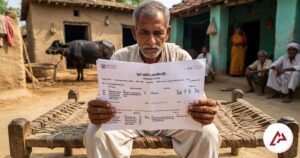
The Legal Framework of Revenue Records and Its Importance
Since land is a state subject in India, the responsibility of maintaining and managing these records lies with the state government’s revenue department. In this digital era, the government has moved land records entirely online. Under the rules of the revenue department, digital portals now host live Khasra Khatauni data to ensure transparency and save citizens from making continuous rounds to the tehsil office.
A thorough inspection of these documents is mandatory before finalizing any property deal because they act as the primary evidence of your ownership in a court of law. If there is any discrepancy in these records, the registration department can declare your sale deed invalid, or your future land mutation might get permanently stalled.
Read More…
- Buying Land from Dalits in Uttar Pradesh Could Be Risky! SC/ST Act Land Protection Law Explained
- Can Marriage or a Joint Family Take Away Your Property? Rules for buying land in Uttar Pradesh
- Understanding Section 80 (Section 143) of the Uttar Pradesh Revenue Code, 2006
- 12 Years of Possession (Adverse Possession) and the Property is Yours? The Complete Story of the Limitation Act and Supreme Court Rulings!
- Will And Inheritance? Knowing These Facts is Crucial to Save Your Land!
- Illegal Encroachment on Land in UP? How Bulldozers and Courts Protect Your Property!
- Nazul Land Freehold Ended? What the Latest Bill Means for Your Land in 2026
- Section 143 Conversion Process: Easy Guide to Convert Agricultural Land to Non-Agricultural in UP in 2026
Blog Category: Property | Law| Vaastu | Property Tax

Understanding Khatauni and Its Core Structure
To put it simply, a Khatauni is an integrated legal register of all land parcels owned by a specific individual or a family. While a Khasra reflects the geographical and agricultural details of a single plot, the collective record of Khasra Khatauni opens up the complete history of any land parcel. Khatauni primarily certifies the title ownership of the property.
When reading a Khatauni, you must first look at the basic information printed at the very top. This includes the name of the district, tehsil, pargana, and the specific village where the land is physically located. Below this introductory section lies the main table containing several specialized columns.
How to Access and Interpret Khasra Khatauni From Online Portals
Under the provisions of the land revenue code, any citizen can now access their land details through the digital Bhulekh portal. When you download the copy of the Record of Rights (RoR) from the official website, you must understand the legal terminology used in its specific columns to read it accurately.
The detailed breakdown of the main columns in a Khatauni is as follows:
-
Category of Land (Shreni): The very first section of the Khatauni specifies the legal category of the land. For instance, “Category 1-Ka” denotes land held by a bhumidhar with transferable rights. In legal terms, this means the owner has absolute, unconditional rights to sell, gift, or mortgage the land. On the contrary, “Category 1-Kha” belongs to non-transferable holders, where the individual has the right to cultivate the land but cannot sell it to anyone else.
-
Name and Details of the Landholder: This column displays the actual land owner’s name, parentage, and permanent residential address. If the land is ancestral and has multiple shareholders, the names of all co-sharers are listed together either alphabetically or based on their specific shares. When buying a property, it is mandatory to ensure that the names of all selling parties are actively present in this column.
-
Khasra Number or Gata Number: This is a unique identification number assigned to each land parcel by the government’s survey department. You can think of it as a roll number for the plot. A single landholder account can contain multiple distinct Khasra numbers, showing that the person’s land holdings are scattered across different parts of the village.
The Legal Distinction Between Khata Number and Gata Number
When you print a copy of your Khasra Khatauni, you will notice a distinct Khata number at the top. Many individuals get confused between a Khata number and a Gata number, which leads to major errors while reviewing legal paperwork.
It is essential to understand the clear distinction between these two terms:
-
Khata Number: This is an administrative account number allocated to a specific individual or an entire family setup. A single Khata account can hold multiple independent land plots within it.
-
Gata Number: This is a purely geographical plot number that determines the physical location and exact boundaries of the land on the official revenue map. If a family account splits, the Khata number changes, but the Gata number remains identical unless the plot itself is physically sub-divided.
-
Total Area (Rakba): The size of the land parcel in a Khatauni is always recorded strictly in hectares. Locally, people might talk in terms of Bigha, Biswa, or Acres, but only hectares are legally valid in government records. While purchasing land, you must verify that the official hectare area matches the actual physical land available on the spot.
-
Land Revenue (Lagaan): This represents the annual tax amount that needs to be paid to the state government for that particular land piece. Although the government has waived off or minimized land revenue for many categories of agricultural land nowadays, it is still mentioned in the records to maintain legal continuity.
How to Verify Columns 7 to 12 of Khasra Khatauni to Avoid Property Fraud
The biggest risks in any real estate transaction are hidden financial liabilities, court stay orders, or prior illegal sales. Complete details of all such hidden legal aspects are recorded in the final columns of a Khatauni, which is commonly known as the “Remarks or Orders” column.
You must pay extra attention to the following points when reviewing this specific column:
-
Bank Mortgage Entries: If the landowner has taken a loan like a Kisan Credit Card (KCC) or any commercial loan against the land, the bank immediately notifies the concerned tehsil office. The registrar or lekhpal then records the loan amount and the bank’s name right inside this remarks column. Until you get an official NOC from the bank and have this entry removed, the land cannot be sold legally.
-
Court Stay Orders: If a legal dispute regarding the land is pending inside a civil court, SDM court, or the Board of Revenue, and the court has issued a status quo or stay order, the entry will appear right here. Dealing with any land that carries an active stay order is completely void under the law.
-
Mutation Orders (Dakhil Kharij): When a person buys a new piece of land, the process of replacing the old owner’s name with the new buyer’s name in official records is called mutation. The final mutation order passed by the Tehsildar is first recorded in this remarks column, and it gets shifted to the main owner column during the next annual or bi-annual update cycle.
Technical Columns of a Khasra and Their Physical Verification
Apart from the Khatauni, the Khasra is the second most critical document. A Khasra is practically a field-book register prepared every year by the local village accountant (Lekhpal or Patwari) based on ground-level inspections. Understanding it gives you a clear picture of the actual usage of the land.
Keep the following parameters in mind while reading a Khasra document:
-
Crop Details: The Khasra clearly documents which specific crops were sown in that particular Gata number during the Rabi, Kharif, and Zaid agricultural seasons. If a piece of land has left uncultivated for a long period, it might be classified as barren or waste land in the records, which drops its commercial valuation.
-
Irrigation Sources: Information regarding whether the plot uses a well, a government canal, a private tube well, or a borewell for water supply is thoroughly maintained in the Khasra. This data helps in evaluating the commercial and agricultural productivity of the soil.
-
Possession Status: Many times, the name in the Khatauni belongs to one person, but the Khasra column shows a different individual holding physical possession of the land. This is known as adverse possession or sharecropper details. Before initiating a land deal, you must check that no unauthorized or hostile possession is marked in the Khasra.
Major Changes Introduced in Khasra Khatauni System Under Modern Rules
Under the Digital India Land Records Modernization Programme, the government has launched advanced security features to make property registration entirely transparent. Every single landowner must stay aware of these technological advancements.
The main upgrades rolled out under the modern rules include:
-
16 Digit Unique Land Code: Every single land parcel or Gata number in the state has now been assigned a unique 16-digit identification alphanumeric code. The initial digits of this code pinpoint the district, tehsil, and village, while the final digits clarify the exact plot number and its internal divisions. This unique code has completely eliminated the scope of selling the same land multiple times using fake identities.
-
Real-Time Khatauni Management: Previously, a Khatauni was updated once every six years, making it a slow document to catch recent updates. Now, the government has introduced a real-time system where any mutation order or bank loan restriction passed at the tehsil level reflects online almost instantly.
Can Errors in Khasra Khatauni Be Corrected Logically?
Clerical mistakes, spelling errors in names, or incorrect area entries are quite common in revenue records. If you notice any such discrepancy in your land documents, do not ignore it, as it can cause massive hurdles during future property transfers or inheritance procedures.
The established legal procedure to correct these mistakes involves:
-
Filing an Application Under Section 32/38: If there is a simple clerical mistake in the name or total area, the landowner needs to file a rectification suit under Section 32 or Section 38 of the Revenue Code before the Sub-Divisional Magistrate (SDM) court.
-
Lekhpal Field Report: Upon receiving the application, the court orders the regional Lekhpal and Revenue Inspector to conduct an on-the-spot verification and cross-match it with old manual records. The final order to correct the digital record is passed only after evaluating their official report.
Investing in real estate is a massive financial and legal decision. A tiny oversight or failure to read a restricted entry can trap you in years of exhausting court battles. This is why having an accurate legal understanding of your Khasra Khatauni is absolutely non-negotiable. If you are planning a large commercial or agricultural property acquisition and require document verification, a professional legal Title Search Report, or help with land mutation issues, you can contact our expert legal advisors immediately. Our legal team will conduct a thorough investigation of all your land records to ensure a completely safe and dispute-free transaction.
Frequently Asked Questions (FAQs)
Are Khasra Khatauni the same document or are they different?
They are completely distinct documents but complement each other. A Khatauni is primarily a proof of ownership that holds the owner’s details and total land area. On the other hand, a Khasra is a geographical field-book that describes the physical dimensions of the plot, current crops sown, trees present, and the actual on-ground possession status.
What does the term “Bhumidhar with Transferable Rights” legally mean in a Khatauni?
This is the highest and safest legal status of land ownership. It explicitly means that the owner holds absolute rights over the property. They have the legal authority to sell the land to any buyer, transfer it as a gift, write a will for it, or use it as collateral to obtain a commercial bank loan without needing any external government permissions.
How can I find out if a piece of land has an active bank loan against it?
To check for any ongoing bank loan or KCC liability, you must review the specific land Khatauni. Look closely at the “Remarks or Orders” section spread across columns 7 to 12. If there is an active loan, the name of the bank, the date of issue, and the total sanctioned loan amount will be clearly written there. If this section is blank, it indicates that the land is free from registered institutional debt.
What is the legal remedy if my name is misspelled in the Khasra Khatauni?
If your name, your father’s name, or your surname is recorded incorrectly in the digital data, you must file a formal rectification application before the Tehsildar or SDM court under the relevant sections of the Revenue Code. You need to attach your valid government ID proofs, a copy of the original registered sale deed, and older manual revenue records. The correction is updated online after a verification report is submitted by the local Lekhpal.
Is a digital Khatauni printed online legally valid everywhere?
Yes, any copy of a Khatauni holding a verified digital signature or extracted directly from the official Bhulekh portal is completely valid for general verification. However, for presenting it as evidence inside judicial courts or during formal bank loan processing, a certified copy carrying the physical stamp and signature of the authorized Tehsil official or Common Service Center (CSC) is generally preferred.
Keywords: how to read khasra khatauni, bhulekh up online check, check property ownership online up, bhulekh up gata number search, land record verification up, how to check land registry online up, up bhulekh khatauni code finder, understand land categories up revenue code, real time khatauni up download, land area conversion hectare to bigha, what is gata number in up bhulekh, check bank mortgage on land up, dakhil kharij status online up, check land dispute status online up, certified copy of khatauni download, up bhulekh village code list, how to find plot number on land map, online land mutation process uttar pradesh, check land registry owner name up, land registry verification lawyers near me, property title search report services, land dispute lawyers in raebareli, property verification services raebareli, certified land document download up, check bhulekh real time records 2026, how to check land map up bhunaksha, duplicate khatauni copy download, land registry fraud prevention checklist, calculate land share in joint khatauni, what is category 1 ka land up, check kcc loan on land bhulekh, how to read land records columns, property due diligence checklist india, understand up revenue code 2006, check ancestral land records online, check land ownership transfer history, land registry office near me, trace old land records uttar pradesh, verification of land registry copy, legal advice for land purchase up, how to remove bank mortgage from khatauni, check status quo order on land, land boundary dispute legal solution, check plot registry details online, extract record of rights up bhulekh, download e khasra online up, how to find khata number by name, property title verification experts, verify khasra map online up, local property registry check services
ब्लॉग कटेगरी: सम्पत्ति | कानून | वास्तुशास्त्र | संपत्ति कर
[Advertisement]


Exclusive Deals
-
Residential Plots Durga Nagar near Tripula Raebareli
₹1,700 -

1500Sf House Tulsi Nagar 2
₹6,100,000 -

House On Manika Cinema Road Raebareli
₹13,500,000 -

Prime Location Villa Raebareli City
₹13,500,000 -

2 Floor House Ali Mia Colony Raebareli
₹5,500,000 -
Residential Plots Bijnor Lucknow-Kanpur Highway
-

Shop Near Railway Station Raebareli
₹1,200,000 -

3.5 Bigha Agriculture Land Near Bachhrawan Raebareli
-

Residential Plot, Near Pragatipuram Raebareli
-

1.5 Biswa Residential Plot, Ekta Vihar Raebareli
₹7,200,000 -

2000 Sf Commercial Hall In Rana Nagar Raebareli for Rent
-

4 Acre Factory Raebareli
-

House Near Railway Station
-

2.25 Biswa Home Near Manika Cinema Road
₹12,000,000 -

2.35 Biswa Plot On Lalganj Raebareli NH Near Ataura
₹3,500,000 -

1500 sf Duplex Near Tripula
₹6,500,000